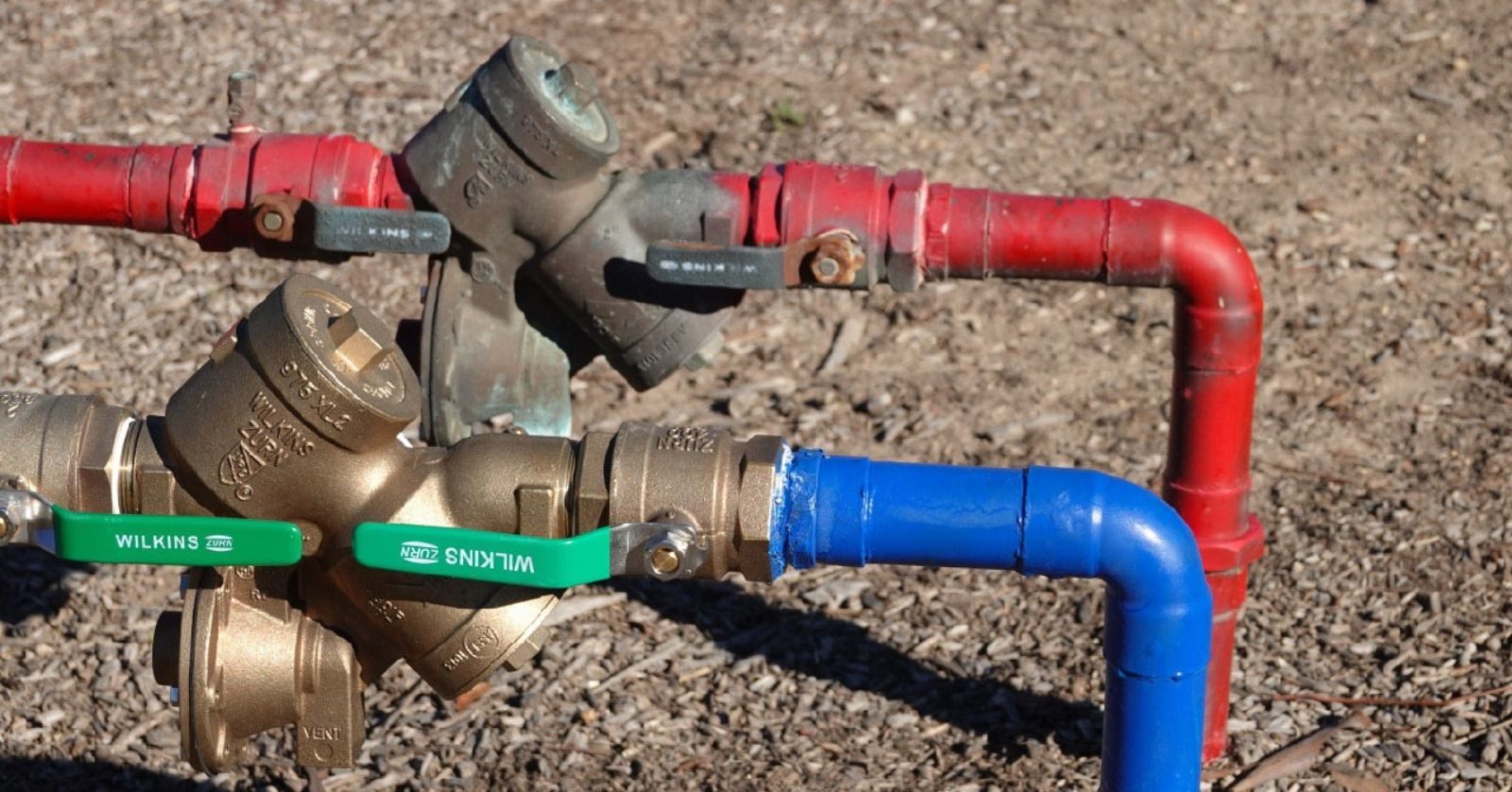
What Backflow Actually Means
Backflow is when water flows in the wrong direction through your plumbing, back into the clean water supply rather than out and away from it. It can happen when municipal water pressure drops unexpectedly while a hose or irrigation head is submerged in standing water, which can siphon whatever's in that water, fertilizer, lawn chemicals, or just dirty water, back toward the supply line.
Why Irrigation Systems Specifically Need This
An irrigation system creates exactly the conditions backflow needs. Buried piping, sprinkler heads that can sit below grade or become submerged, and a direct connection to the home's water supply. A backflow prevention device sits at that connection point and uses check valves to physically stop water from reversing direction, even if pressure drops.
Why Backflow Devices Get Tested
A backflow device's internal components, seals, springs, and check valves, wear over time like any mechanical part, and a device that's failed silently provides no actual protection despite still being physically present. Testing with calibrated equipment confirms both check valves are actually holding under simulated backflow conditions, not just that the device is installed.
What Happens If a Device Fails Testing
Most failures are a worn seal or spring rather than a failure of the device body itself, which means a rebuild resolves it in the same visit in most cases. A full replacement is only necessary when the device body itself is damaged or when it's an old, discontinued model that no longer meets current standards.
Where Backflow Devices Are Typically Installed
Most residential devices sit near where the irrigation system connects to the main water line, often in a valve box near the front of the property or mounted on an exterior wall close to the connection point. Knowing where yours is makes both routine testing and any future troubleshooting faster.
New Construction and Renovation Considerations
If you're adding an irrigation system to a home that didn't previously have one, ask your installer and your water utility what backflow protection the connection needs before the work starts. The same applies to certain other cross-connections, like a well pump tied into the same system as municipal water, which is worth flagging to us if it applies to your property.
Common Backflow Device Types
Residential irrigation systems most commonly use either a pressure vacuum breaker or a double check valve assembly. The right type depends on the specific installation and on what your water utility accepts. Both work on the same basic principle of preventing reverse flow. They differ in their testing requirements and the level of protection they offer for different cross-connection risks.
What a Failed Inspection Doesn't Mean
A device that fails its test doesn't mean backflow has actually occurred, only that the device is no longer guaranteed to prevent it if the right conditions arose. Most failed tests we see are addressed with a straightforward rebuild, not a sign of a bigger problem, so there's no reason to be alarmed by a failed test itself, just a reason to get it addressed promptly.
Choosing a Certified Tester
Backflow testing needs calibrated equipment and a qualified tester, and your water utility can tell you whose results it accepts. Using an unqualified tester or skipping the test because it seems like a formality can leave you without valid documentation even if the device itself happens to be working fine.
If you've received a testing notice or aren't sure when your device was last checked, our backflow testing and prevention page covers what the test involves. A backflow device sits at the same point-of-entry as a whole-home filtration system, and the two are sometimes serviced together. We test the same devices for North Austin properties.
Pflugerville Local Note: Ask the City First
The City of Pflugerville lists a Cross Connection Control and Backflow Prevention program on its website. We have not summarized its rules here because they can change. Before you add an irrigation system or schedule a test, call the city's Public Works line at 512-990-6400 and ask what applies to your property.
Three questions are worth asking. What does the program expect for your connection, whose test results does the city accept, and where should the paperwork go. Write the answers down and hand them to whoever does the work.
We also serve nearby homes in Round Rock and North Austin.
Common Questions
Do I need a backflow device if I don't have irrigation?
Not typically for a standard home without irrigation or other cross-connections, though certain other setups can require one. It's worth confirming if you're unsure.
What happens if I skip the test?
Beyond the compliance issue, a failed and untested device provides no actual protection if backflow conditions occur, which is the real risk, not just the paperwork.
Can I install a backflow device myself?
It's not something we'd recommend. Testing is how you know both check valves are still holding, and a missed test can leave you without current paperwork.
How long does a typical backflow device last before needing replacement?
With regular testing and occasional rebuilds, a device can last many years. It's the internal seals and springs that wear out well before the body itself typically needs replacing.
Who receives the results of my backflow test?
Test results are documented, and some utilities ask for a copy. Ask your water utility whether it wants yours, and we can help with the paperwork.
What's the difference between a pressure vacuum breaker and a double check valve?
Both prevent reverse flow, but they're suited to different cross-connection risk levels and have different testing requirements, which one your system needs depends on the specific installation.
Does a failed backflow test mean contamination already happened?
No, a failed test means the device can't be relied on to prevent backflow if conditions arose, not that backflow has actually occurred. It's a preventive finding, not evidence of a past problem.
How far in advance should I schedule my test?
Scheduling a few weeks before your compliance deadline gives enough buffer to address a rebuild or any documentation issue without risking a lapse in your recorded compliance.
Does the device need to be tested if the irrigation system is only used seasonally?
Yes, the test is about the device and not how often the system runs, so an idle irrigation system still needs its device checked.
Can a backflow device be relocated if it's in an inconvenient spot?
In some cases yes, though relocation involves re-plumbing the connection point, so it's worth discussing feasibility and cost before assuming it's a simple move.
Does a backflow device need protection during a hard freeze?
Yes, an above-ground device is vulnerable to freezing the same way exposed pipe is. Insulating or wrapping it ahead of a cold snap is a reasonable precaution.
Does a brand-new device need testing?
Yes, a new installation typically gets its first test at or shortly after installation to establish a baseline, and the device is checked on a regular schedule after that.
What documentation should I keep after a passed test?
Keep a copy of the test report for your own records, in case it is needed for a future inspection or sale of the property.
Are commercial properties held to the same testing standard as residential ones?
Commercial connections often carry higher cross-connection risk, so ask your utility what testing schedule applies to yours.
Does the City of Pflugerville have a backflow program?
The city lists a Cross Connection Control and Backflow Prevention program on its website. Call Public Works at 512-990-6400 to ask what applies to your irrigation system before you schedule a test.