Why This Happens in Pflugerville
Water damage calls in Pflugerville most often follow a burst pipe, a slab leak that went undetected for a while, or a sump pump failure during a heavy storm. The restoration approach depends heavily on how long the water sat before it was discovered, since that determines how far moisture has spread into building materials.
Whether the water came from a failed line in Old Town or a slab leak in Falcon Pointe, the first hours decide how far moisture spreads into drywall and flooring.
How to Tell You Need This
Visible Standing Water
Standing water needs to be extracted quickly to limit how far it spreads into flooring and subflooring.
Water Stains on Walls or Ceilings
A stain, even a dry one, often means moisture reached that area at some point and may still be trapped behind the surface.
Musty or Damp Smell
A persistent musty odor is often the first sign of moisture retained inside a wall cavity or under flooring.
Warped or Buckling Flooring
Flooring that's warped, cupped, or lifting is a sign moisture has already penetrated the material itself.
Water Damage Emergency: First Steps While You Wait
Water damage spreads steadily until the source is stopped and the area is dried. These steps help while the crew is on the way.
Stop the source
Close the main valve or the fixture shutoff. Nothing else matters until the water stops.
Avoid electrical risk
Stay out of standing water near outlets, panels and plugged-in appliances. Wait outside the area if unsure.
Photograph before moving
A few quick photos of the water and the damage support an insurance claim.
Lift and ventilate
Move rugs and furniture out of the wet area and open windows if the weather allows.
Our Water Damage Restoration Process
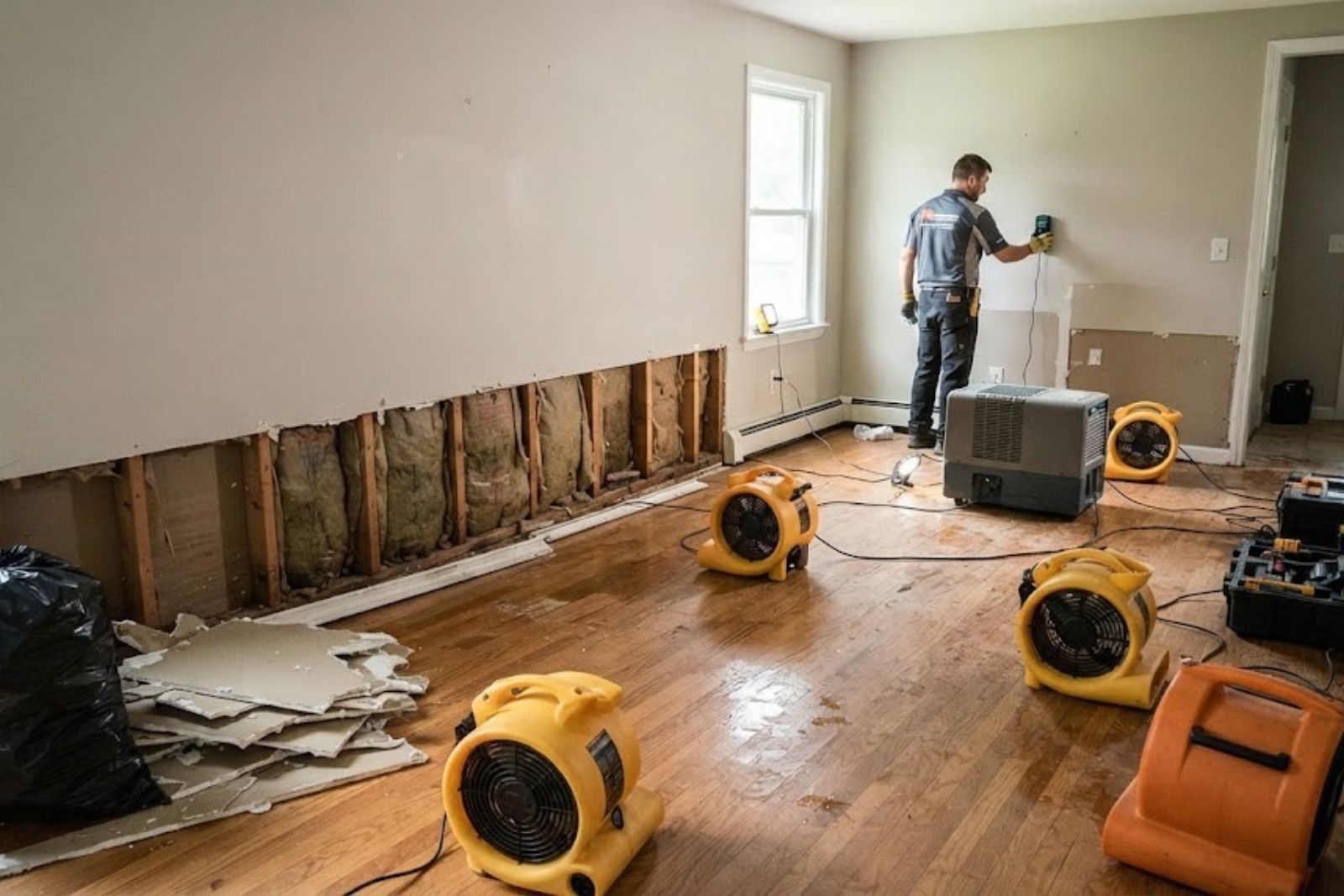
The first priority is extracting standing water and identifying the full extent of moisture intrusion using moisture meters, which detect dampness inside walls and under flooring that isn't visible from the surface.
Once the affected area is mapped, industrial air movers and dehumidifiers dry the space over a period of days, with moisture readings taken periodically to confirm materials have actually dried through rather than just appearing dry on the surface.
Which Option Fits Your Situation
How much material needs to be removed versus dried in place depends on how long the water was present and what it touched.
Dry in Place
- Possible when water is caught early.
- Preserves existing flooring and drywall.
- Faster overall timeline.
- Requires thorough moisture verification before closing up.
Remove and Replace Affected Material
- Necessary when materials have absorbed water over time.
- Reduces mold risk in porous materials like drywall and carpet padding.
- Standard for water present more than 24-48 hours.
- Followed by structural drying of the remaining space.
What Determines the Price
Water damage restoration pricing depends on the affected area's size, how long water was present, and what materials need to be dried or replaced.
Homeowners insurance often covers water damage restoration from a sudden event like a burst pipe, though gradual damage from an undetected slow leak is frequently excluded. We provide documentation to support your claim either way. Want your real number? Call (833) 521-1033.
Restoration and water mitigation work together closely, with mitigation focused on stopping active water intrusion and restoration on drying and repair. When the damage traces back to a specific plumbing failure, our burst pipe repair and slab leak detection pages cover the plumbing side of the fix. We respond to the same emergencies for Wells Branch homeowners.
Wet Floor Calls We Handle Most
Water damage calls start in different places but follow the same urgent pattern.
Appliance line leaks
A refrigerator ice maker line or washer hose that fails can flood a kitchen or laundry room. We stop the source and start drying.
Leaks inside walls and ceilings
Water behind drywall spreads before it shows. We trace the source and open only what we need to.
Rental houses
Landlords and property managers call when a tenant reports a leak. We document the damage for your records.
Frequently Asked Questions
How fast do you respond to water damage?
Our emergency line for water damage is answered 24/7. The faster water is extracted, the less material typically needs to be replaced.
Will insurance cover this?
Sudden events like a burst pipe are often covered. A slow leak that went undetected for a while is more likely to be excluded, depending on your specific policy.
How do you know if the space is fully dry?
Moisture meter readings inside walls and under flooring confirm actual dryness, not just surface appearance.
Do you handle the plumbing repair too?
Restoration and the underlying plumbing repair are related but separate. Our plumbing team can address the cause while restoration handles the resulting damage.
How long does the drying process usually take?
Most structural drying takes three to five days, depending on how much moisture the affected materials absorbed and how large the affected area is.
Is water damage an emergency?
Yes. Drywall, insulation and flooring can start holding moisture within hours, which makes a fast response important.
Do you work with property managers?
Yes. We respond to rental properties, document what we find and give you a clear record for your insurer.
Still have a question about Water Damage Restoration in Pflugerville? Call (833) 521-1033 and we'll answer it directly.