The Local Factor Behind This Problem
The gap between when water starts flowing and when a technician arrives is the single biggest factor in how much damage a Pflugerville home ends up with. Water spreads through porous flooring and wall materials continuously during that window regardless of the original source.
From Windermere to Blackhawk the call is the same: stop the source, then pull standing water out fast, before it reaches baseboards and carpet padding.
Do You Need Water Mitigation?
Active Water Source
Water actively flowing from a burst pipe, appliance failure, or storm intrusion needs immediate mitigation, not a scheduled visit.
Water Spreading Beyond the Original Area
Water that's already migrating to adjacent rooms or flooring needs urgent containment to limit the total affected area.
Uncertain Source of Water
When it's not immediately clear where water is coming from, quick assessment is critical to stopping it at the source.
Risk of Electrical Hazard
Standing water near electrical outlets or panels is a safety priority addressed immediately upon arrival.
Water Intrusion Emergency: What To Do While We Dispatch
When water is actively entering a structure, the first minutes decide how far it spreads.
Stop the water at its source
Close the main valve or the fixture shutoff if you can reach it safely.
Make the area electrically safe
Switch off breakers to wet rooms only from a dry spot. If you cannot, stay out and wait for us.
Contain and move contents
Lift furniture and belongings onto dry surfaces and use towels to slow water heading toward other rooms.
Document and call
Take photos for your insurer, then call our 24/7 line with the address and what you see.
How We Handle It
The first step on any mitigation call is stopping the source, whether that's shutting off a water supply valve, sealing an entry point, or coordinating with our plumbing team on an active pipe failure. Containing the source matters more in the first hour than beginning cleanup.
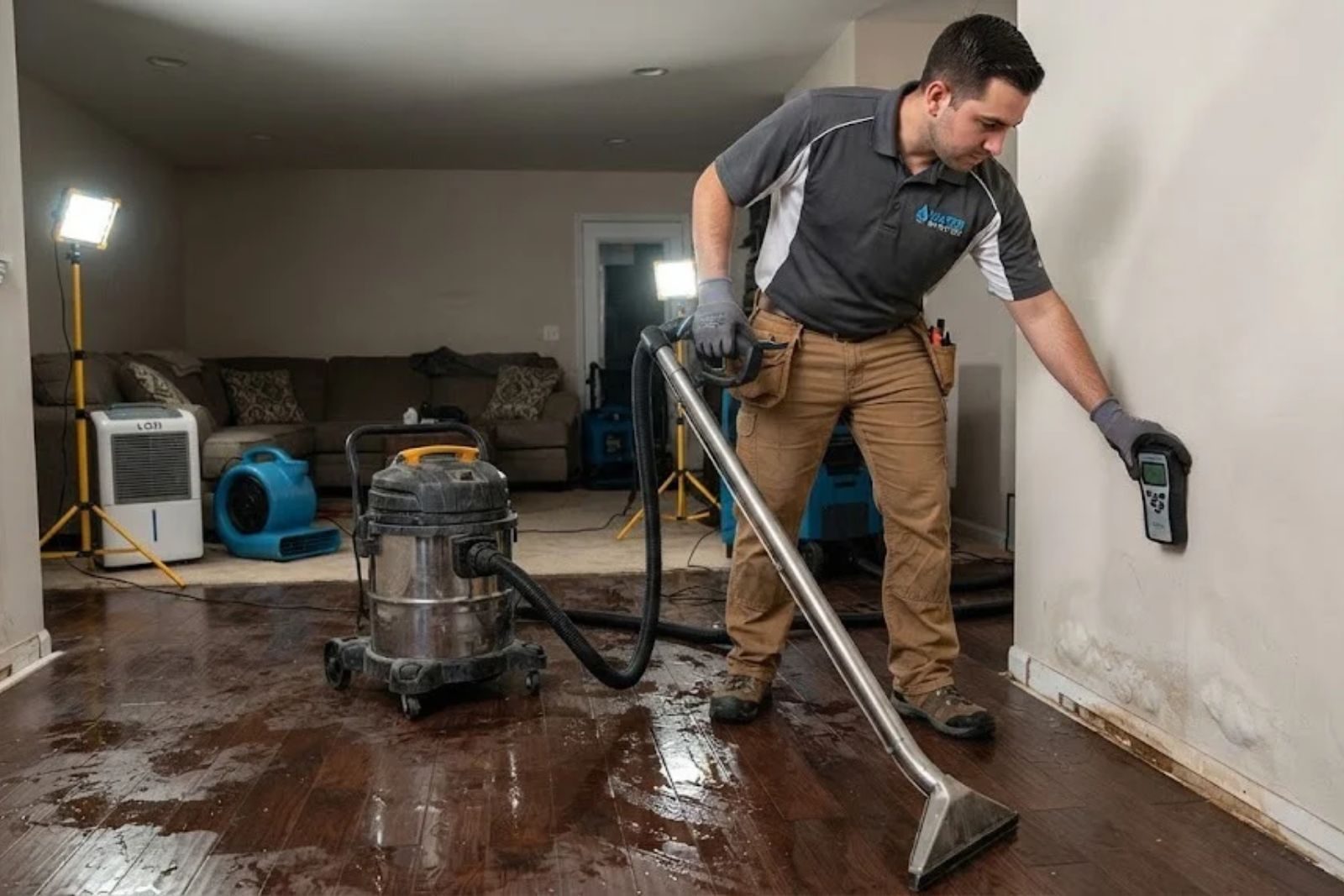
Once the source is controlled, extraction equipment removes standing water immediately, and containment barriers limit moisture from spreading to unaffected areas while the fuller drying and restoration process gets underway.
What Your Options Look Like
Mitigation is inherently urgent, but the scope of the response depends on how much area is already affected when we arrive.
Immediate Source Control + Extraction
- Stops the water source first.
- Extracts standing water before it spreads further.
- Limits the total affected area.
- First priority on every emergency call.
Full Restoration (Follow-Up Phase)
- Begins once the active water event is controlled.
- Structural drying over several days.
- Material replacement where needed.
- See our water damage restoration page.
Pricing Transparency
Mitigation pricing depends on the size of the affected area and how quickly the source was controlled.
Emergency mitigation for a sudden water event is often covered by homeowners insurance. We document the response for your claim. Want your real number? Call (833) 521-1033.
Once the immediate water event is controlled, the drying and repair phase is covered in detail on our water damage restoration page. When the source is a plumbing failure specifically, our burst pipe repair team addresses that directly, and a failed sump pump during a storm is one of the more common triggers for a mitigation call. We respond to the same emergencies for North Austin homeowners.
Not Every Wet Basement Is A Plumbing Leak
Callers describe active water in many ways, and the cause is not always the same.
Wet basements after storms
Seepage through foundation walls after heavy rain is a drainage problem, not a plumbing leak. We will tell you which one you have.
A line exposed by a utility crew
When a crew uncovers a leak near the house, the water can reach the foundation fast. We help stop the water that reaches the structure.
Leaks in walls
A leak inside a wall can keep soaking drywall and insulation while you wait. We stop the water and start containing it right away.
Questions We Hear Often
What's the difference between mitigation and restoration?
Mitigation is the immediate response to stop and contain active water. Restoration is the drying and repair work that follows once the source is controlled.
How fast can you respond?
Our line is answered 24/7 specifically because response time matters most in the first hour of an active water event.
Should I try to stop the water myself before you arrive?
If you can safely shut off a water source, like the main valve, that helps. Avoid contact with standing water near any electrical outlets or panels.
Do you coordinate with a plumber on the underlying cause?
Yes, mitigation addresses the water itself while our plumbing team addresses the pipe or fixture that caused it.
What happens after the mitigation phase is done?
Once the source is controlled and standing water removed, the property moves into the drying and repair work covered on our water damage restoration page.
Is mitigation always needed before restoration can start?
For an active or recent water event, yes. Mitigation stops the situation from getting worse before the drying and repair work begins.
How is mitigation different from restoration?
Mitigation stops and contains active water and starts drying. Restoration is the repair work that follows once the structure is dry.
Is a wet basement after a storm a plumbing problem?
Not always. Water seeping through the foundation after heavy rain is usually a drainage issue, while a steady flow with no rain points to plumbing. Call us and we will help sort out which it is.
Still have a question about Water Mitigation in Pflugerville? Call (833) 521-1033 and we'll answer it directly.