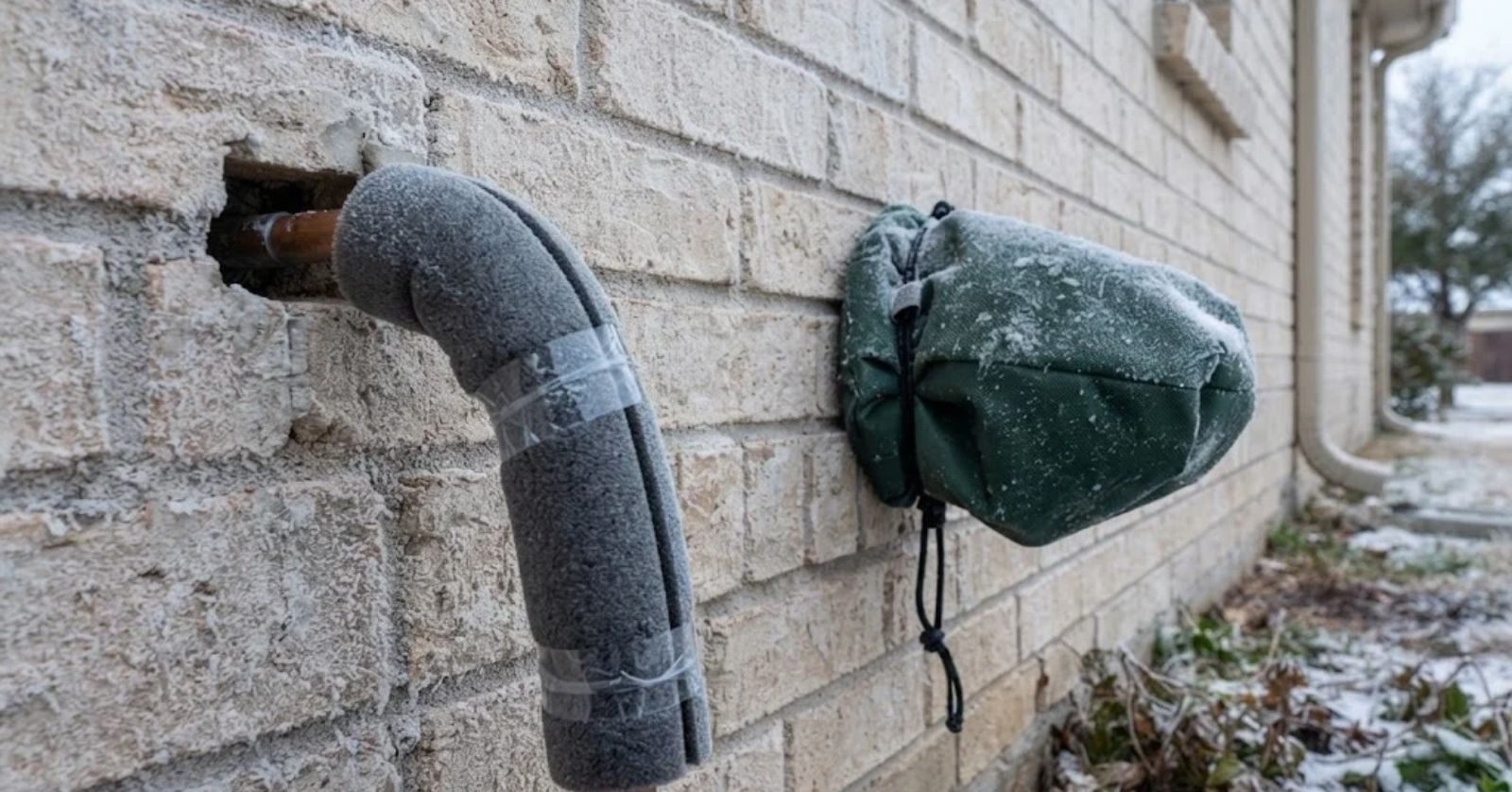
Why a Short Freeze Can Still Do Damage
In a climate where freezing temperatures are routine, pipes are typically run through conditioned interior space and insulated as standard practice. Supply lines often run through an attic, exterior wall, or garage, and those are the first places a freeze reaches.
Before the Forecast Turns Cold
Disconnect and drain garden hoses, and shut off and drain any exterior faucets if yours have a separate shutoff. Locate any exposed pipe in a garage, crawlspace, or exterior wall and wrap it with foam pipe insulation, inexpensive and available at any hardware store. Know where your main water shutoff valve is, in case a pipe does fail despite precautions.
During an Active Freeze Warning
Let faucets fed by exposed or vulnerable pipe drip slightly, moving water is far less likely to freeze solid than standing water. Open cabinet doors under sinks on exterior walls to let warmer household air reach the pipes. Keep the thermostat consistent rather than lowering it overnight, even if you're not home.
If a Pipe Freezes or Bursts Anyway
A frozen but not yet burst pipe usually shows up as a fixture with no flow. Shut off the water at the affected fixture if possible. Never use an open flame to thaw a pipe, that's a real fire risk and can damage the pipe further. If a pipe has already burst, shut off the main water valve immediately and call.
Which Pipes Are Most at Risk
Exterior hose bibs, pipe running through an unheated garage, and any supply line in an attic without adequate insulation are the most common failure points we see during a hard freeze here. Pipes on exterior-facing walls with minimal insulation, common in older construction, are also more exposed than pipe run through fully interior walls.
A Note on Insurance Coverage
Sudden freeze damage, like a burst pipe from a cold snap, is often covered by homeowners insurance as sudden and accidental damage, though specific policy language varies. It's worth understanding your policy's terms before winter rather than during an active claim, and documenting any preventive steps you took can also support a claim if damage does occur despite precautions.
Preparing an Irrigation System for Freezing Weather
If your home has an irrigation system, it's worth draining and shutting it down ahead of the first hard freeze of the season. The buried lines and above-ground components, including the backflow prevention device, are vulnerable to the same freeze risk as household plumbing. A professional blowout, clearing the lines with compressed air, is the most thorough approach for a system with in-ground piping.
After the Freeze Passes
Once temperatures rise back above freezing, check every faucet in the house for normal flow, and look for any signs of dampness around pipe that was exposed during the cold snap. A pipe that survived the freeze without bursting can still have hairline damage that only shows up as a slow leak days later, so it's worth a careful check even if nothing seemed to go wrong at the time.
What Makes This Region's Freezes Especially Damaging
Freezes can arrive suddenly and briefly, which leaves less lead time to prepare. A forecast that shifts from mild to a hard freeze within a day or two is common here, which is exactly why having your preparations already in place, rather than scrambling once a freeze warning is issued, matters so much.
Freeze-Prep Checklist
- Disconnect and drain garden hoses.
- Insulate exposed pipe in garages, attics, and exterior walls.
- Know the location of your main water shutoff valve.
- Let vulnerable faucets drip during a hard freeze.
- Open cabinet doors under sinks on exterior walls.
- Review your homeowners insurance policy's freeze damage coverage.
- Drain or blow out an irrigation system before the first hard freeze.
If a pipe has already failed from freezing, our burst pipe repair page covers our emergency response process. A frozen and cracked section of the main line specifically is covered on our water line repair and replacement page. We respond to the same cold-snap emergencies for Round Rock homeowners.
Pflugerville Local Note: Spotting a Freeze Leak Early
After a freeze, a split pipe can leak quietly inside a wall. The City of Pflugerville's free WaterSmart dashboard shows daily water use and offers usage alerts, so a sudden jump after the weather warms is a reason to check for a burst line.
Know where your main shutoff is before the cold arrives. If water is flowing at the street or meter, the city's after-hours emergency line is 512-990-6700.
We also serve nearby homes in Round Rock and Hutto.
Common Questions
How cold does it actually need to get for pipes to freeze here?
Sustained temperatures below freezing for several hours put unprotected pipe at real risk, so even a short cold snap can cause damage when pipes are exposed.
Is letting a faucet drip actually necessary, or just extra caution?
It genuinely helps. Moving water resists freezing far better than standing water in a pipe, and it's one of the most effective low-cost precautions available.
Can insulating pipe after the fact still help mid-winter?
Yes, it's worth doing as soon as you identify exposed pipe, even partway through the season, rather than waiting until next year.
Should I disconnect my water heater during an extended freeze?
Not typically necessary for a standard cold snap. The water heater itself is usually in a protected interior space, though its exposed connections are worth checking.
How long does frozen pipe damage take to show up?
Sometimes immediately once it thaws and the crack becomes apparent. Other times a day or two later as the ice fully melts and water finds its way out.
Do I need to winterize my irrigation system every year?
Yes, if your area sees any hard freezes, since the risk to buried and exposed irrigation components resets each winter regardless of what was done the year before.
What if I'm traveling during a forecasted freeze?
Leaving the thermostat at a consistent temperature, not turned down to save energy, and having a neighbor check on the house if a hard freeze is expected during an extended absence are both worth arranging ahead of time.
Why can a short freeze cause so much damage?
Homes here generally aren't built with the same pipe insulation standards as consistently cold climates, and freezes often arrive with little lead time, both of which add up to more risk per cold snap than the same temperature drop would cause elsewhere.
Should I cover outdoor faucets with insulated covers every winter?
Yes, an inexpensive foam faucet cover is a simple, reusable precaution worth applying every year ahead of the first expected freeze, not just during an unusually cold season.
Do pipes in a slab foundation face the same freeze risk as elevated pipes?
Generally less risk, since slab-set pipe benefits from the ground's insulating effect. It's exposed pipe in attics, garages, and exterior walls that faces the greater freeze risk.
How can I spot a freeze leak after the weather warms in Pflugerville?
Watch your water use. The city's free WaterSmart dashboard shows daily use and offers usage alerts, and a sudden jump after a freeze is a reason to check for a burst pipe.